Disability Inquision Activities (DIA)
Empowering Voices, Driving Change, Building Inclusive Futures
01.
Disability Inclusion
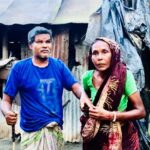
We work to ensure the rights, dignity, and inclusion of persons with disabilities. Our programs focus on accessibility, capacity building, and equal participation in society.
02.
Education
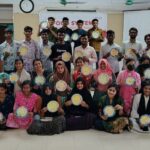
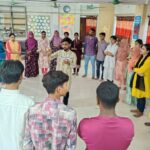
We work to ensure access to inclusive and quality education for all learners. Our programs focus on skills development, lifelong learning, and equal educational opportunities.
03.
Environment
We work to promote environmental protection and sustainable development for communities. Our programs focus on conservation, climate resilience, and responsible use of natural resources.
DIA in brief
In the nineties of the nineteenth century, the socio-economic context of Bangladesh suffered a major setback for the reason of post-war political instability and poor control mechanism. As an agrarian economy, the setback has a devastating effect on the country’s economy. The main reasons behind this are frequent movements, political instability and numerous changes of governments, which were major obstacles to maintaining socio-economic stability and discipline of the country. In such a chaotic situation, policy formulation and overall development planning are severely hampered. As a result, the country’s overall economic growth has been hampered and the unemployment rate has risen alarmingly.
In that turbulent time, in January 1997, with the conviction of the overall welfare of the underprivileged people of the country, Disability Inquision Activities (DIA) started as a non-governmental voluntary organization in a remote area called Bishaykhali of Maharajpur Union of Jhenaidah Sadar Upazila in Jhenaidah District, about 202 kilometers away from the capital Dhaka. Improvement of the overall standard of living by making the poor, oppressed, tortured and helpless people of the country financially dependent by taking various socio-economic activities in the country is our mission.
Our Vision, Mission & Goal
A just, inclusive, and prosperous society where all people—especially women, children, persons with disabilities, youth, and the elderly—live with dignity, equality, and equal access to opportunities, services, and rights.
To promote sustainable socio-economic development and human rights through inclusive education, skills development, health services, legal support, environmental protection, disaster response, and livelihood opportunities, with special focus on marginalized and vulnerable communities across Bangladesh.
To empower marginalized populations to become self-reliant, rights-aware, and resilient, while contributing to poverty alleviation, social justice, gender equality, and sustainable rural and national development.
Our Objectives
- Provide vocational and job-oriented training to unemployed and disadvantaged youth, women, and men.
- Implement income-generating, self-employment, microcredit, small and cottage industry programs.
- Form, organize, and manage women’s and community-based groups.
- Promote awareness of human rights, women’s rights, and legal entitlements.
- Advocate for equal wages, marriage registration, and elimination of child marriage, dowry, and polygamy.
- Build social resistance against corruption, bribery, violence, and discrimination.
- Provide legal awareness, counseling, and assistance to poor, oppressed, and abused women and children.
- Support survivors of violence, acid attacks, trafficking, and exploitation through legal aid and rehabilitation.
- Prevent child labor, child marriage, abuse, trafficking, and exploitation.
- Ensure access to education, health, nutrition, and cultural activities for all children.
- Support orphan rehabilitation, adolescent life-skills education, libraries, vocational training, and education loans.
- Establish vocational, educational, and rehabilitation programs for persons with physical and mental disabilities.
- Promote social inclusion and family integration of persons with disabilities.
- Provide shelter, healthcare, food, cultural activities, and funeral support for elderly people.
- Promote maternal, child, and adolescent health, nutrition, vaccination, and family planning.
- Organize medical camps, midwifery training, and HIV/AIDS awareness programs.
- Promote safe water use, hygienic sanitation, arsenic mitigation, and community hygiene practices.
- Support formal, non-formal, supplementary, continuing, and technical education.
- Promote girls’ education and job-oriented technical and IT training.
- Conduct research, surveys, seminars, and innovation-based development projects.
- Promote environmental awareness, social forestry, tree plantation, clean energy, and improved stoves.
- Support agriculture, fish farming, poultry, livestock, and climate-smart technologies.
- Strengthen rural institutions and resource mobilization for sustainable livelihoods.
- Provide emergency relief, rehabilitation, and disaster preparedness services.
- Prevent drug abuse and support treatment and rehabilitation.
- Prevent trafficking of women and children through awareness, border-area committees, rescue, and reintegration.
- Coordinate with government, non-government, national, and international organizations.
- Implement approved microcredit programs under relevant authorities.
- Undertake any additional public welfare activities approved by the Executive Council.
15
PROJECTS
5
OFFICE
500+
VOLUNTEERS & STAFF
75000+
BENEFICIARIES
Core Values and Their Descriptions
Equity and Inclusion:
Ensure fair and equal access to resources, services, and opportunities for all individuals—especially marginalized and vulnerable groups—by promoting diversity and actively removing physical, social, and institutional barriers to participation.
Participation and Community Leadership:
Engage communities meaningfully in all stages of program design, implementation, monitoring, and evaluation while recognizing, strengthening, and supporting local knowledge, leadership, and community ownership of initiatives.
Accountability and Transparency:
Uphold high ethical standards through responsible and efficient use of resources while maintaining open communication and ensuring that decisions, actions, and results are accessible and reviewable by stakeholders, communities, and partners.
Partnership:
Work collaboratively with communities, government institutions, civil society
organizations, and development partners while fostering mutual trust, respect, shared
learning, and collective responsibility to maximize development impact.
Sustainability:
Build long-term community capacities, systems, and locally owned solutions that extend beyond project timelines while strengthening resilience and empowering communities to sustain development gains independently.
Rights-Based Approach:
Integrate human rights principles into all programs and policies to ensure dignity, equality, and non-discrimination while advocating for justice, protection of fundamental freedoms, and accountability of duty bearers.
Youth Empowerment:
Equip young people with skills, opportunities, and platforms for meaningful participation in social and economic development while promoting youth leadership, innovation, confidence, and active citizenship.
Thematic Areas of Intervention
01.
Inclusive Education and Disability Inclusion
DIA promotes equitable access to quality education for children and adolescents with disabilities and out-of-school children. Interventions include disability identification and assessment, provision of assistive devices, adapted learning materials, inclusive pedagogy, and accessible learning environments. Programs align with SDG 4 and UNCRPD principles, emphasizing dignity, autonomy, and full participation.
02.
Women’s Empowerment and Gender Equality
DIA works to strengthen the social, economic, and leadership capacities of women and girls in
marginalized communities. Activities include awareness on gender-based violence, leadership
development, economic empowerment initiatives, and community advocacy to challenge harmful
norms, contributing to SDG 5.
03.
Adolescent and Youth Health and Development
Programs support adolescents and youth with reproductive health education, life skills, leadership
training, and access to government health services. Youth-led platforms and clubs foster civic
engagement, resilience, and employability, aligning with SDGs 3 and 8.
04.
Child Protection and Rights
DIA implements child protection interventions to prevent child marriage, child labor, trafficking, and
abuse. Community awareness, school engagement, referral mechanisms, and coordination with
government child protection systems ensure safeguarding and rights realization.
05.
Health, Nutrition, and WASH
The organization promotes health, hygiene, nutrition, and access to government health services
through community-based education and WASHES interventions.
06.
Disaster Risk Reduction and Climate Resilience
Operating in cyclone- and flood-prone coastal districts, DIA integrates disaster preparedness, early
warning, emergency response, and climate adaptation into community programming. These efforts
align with the Sendai Framework for Disaster Risk Reduction and SDG 13.
07.
Livelihoods and Economic Resilience
DIA supports vulnerable households with skills training, income-generating activities, and livelihood
diversification, particularly in climate-affected coastal areas. Programs emphasize sustainability,
market linkage, and resilience.
Way forward
Rooted in community leadership and aligned with national priorities and global development frameworks, Disability Inquisition Activities (DIA) is a trusted civil society organization advancing inclusion, resilience, and human dignity across Bangladesh. DIA works at the intersection of disability inclusion, gender equality, youth empowerment, and climate resilience, delivering rights-based and community-driven solutions. Guided by strong governance, ethical practices, and accountability, the organization partners with communities, government institutions, and development actors to address systemic inequities. Through inclusive programming and sustainable approaches, DIA empowers marginalized populations and contributes to equitable, resilient, and inclusive development outcomes nationwide.